-
-
-
-
-
-
-
-
-
-
-
-
-
-
- 脱兎 森のうさぎ2026 Morinousagi
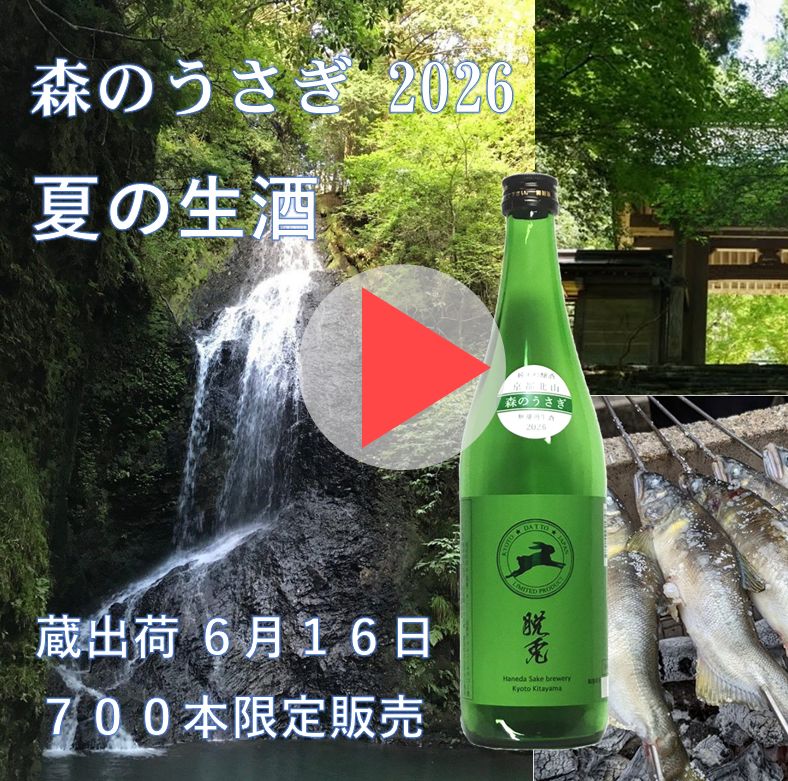
- 京都産五百万石と京都酵母「京の琴」と蔵の酵母、京都北山の水で造る無濾過生原酒。口下手な蔵人達がリラックスして語ります。夏に飲んで美味しい生酒。メロンの香り、キレの良さがあります。700本限定生産です。
- This unfiltered, unpasteurized sake is made with Kyoto-grown Gohyakumangoku
rice, Kyoto yeast "Kyo no Koto," the brewery's own yeast, and
water from Kitayama, Kyoto. The usually reserved brewers are relaxed and
sharing their thoughts. A delicious unpasteurized sake perfect for summer.
It has a melon aroma and a crisp finish. Limited production of 700 units.
- Ce saké non filtré et non pasteurisé est élaboré à partir de riz Gohyakumangoku
cultivé à Kyoto, de levure de Kyoto « Kyo no Koto », une levure maison,
et d'eau de Kitayama, à Kyoto. D'ordinaire réservés, les brasseurs se montrent
détendus et partagent leurs impressions. Un délicieux saké non pasteurisé,
idéal pour l'été. Il offre un arôme de melon et une finale rafraîchissante.
Production limitée à 700 bouteilles.
- 原田杜氏が語る「祝-K5」 Iwai-K5
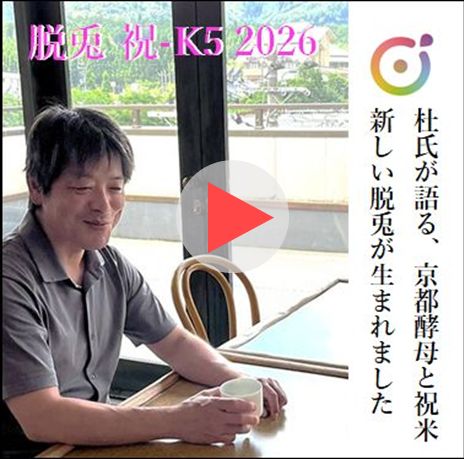 原田杜氏が自ら語る「祝-K5」。
- 5種の酵母が醸す、リンゴ酸、コハク酸の味。昔懐かしいサイダーのような香り。
- Master brewer Harada himself talks about "Iwai-K5". Brewed with
five types of yeast, it has the flavors of malic acid and succinic acid.
It has a nostalgic aroma like old-fashioned cider.
- Le maître brasseur Harada lui-même parle de l'« Iwai-K5 ». Brassée avec
cinq types de levures, elle présente des saveurs d'acide malique et d'acide
succinique. Son arôme évoque la nostalgie des cidres d'antan.
-
-
- 祝-K5 Iwai-K5 京都酵母と祝米
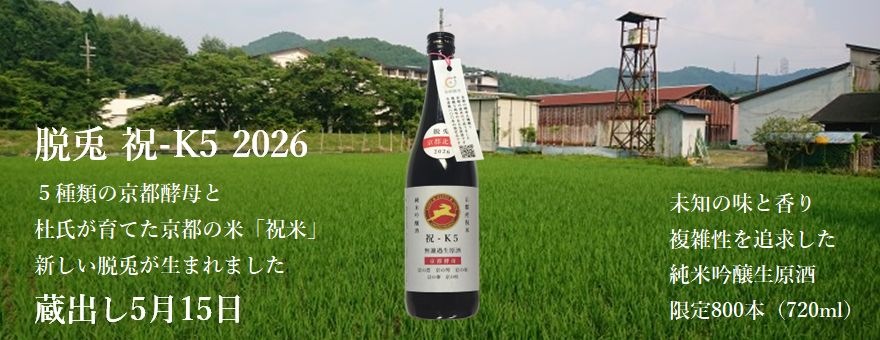 原田杜氏が暖めていたプランが実現しました。京都酵母5種類と杜氏が自ら育てた、京都限定の酒造好適米「祝」で造った純米吟醸無濾過生原酒です。複雑な味と香りが感じられます。800本(720ml)の限定生産です。「祝-K5」は、米の名前と京都酵母5種からつけました。
- A plan that Toji Harada had been developing has finally come to fruition.
This is an unfiltered, unpasteurized Junmai Ginjo sake made with five types
of Kyoto yeast and "Iwai," a sake rice variety grown by the Toji
himself and exclusive to Kyoto. It boasts a complex flavor and aroma. Production
is limited to 800 bottles (720ml)."Iwai-K5" is named after the
rice variety and five types of Kyoto yeast.
- Le projet mûri par Toji Harada a enfin abouti. Il s'agit d'un saké junmai
ginjo non filtré et non pasteurisé, élaboré à partir de cinq levures de
Kyoto et d'« Iwai », une variété de riz à saké cultivée par le Toji lui-même
et exclusive à Kyoto. Ce saké offre une complexité aromatique exceptionnelle.
La production est limitée à 800 bouteilles (720 ml). « Iwai-K5 » tire son
nom de la variété de riz et des cinq levures de Kyoto utilisées.
-
- 裏脱兎 2026 Ura Datto Jyunmaidaginjyo
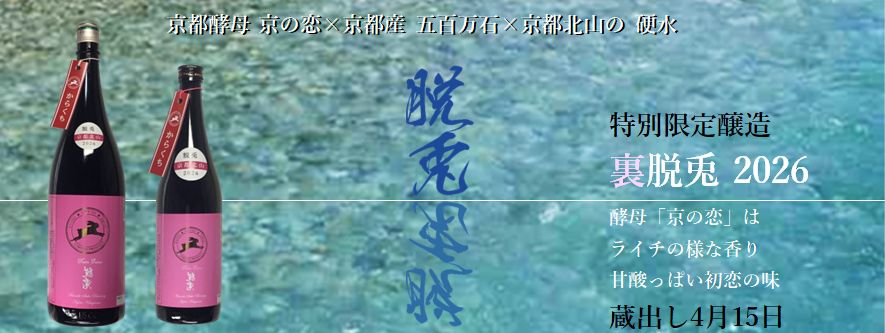 京都産五百万石と京都酵母〝京の恋〟で造る「裏脱兎」は、脱兎シリーズの中で異色のお酒です。
京都産「五百万石」は雑味を捨て上品さだけを残した酒造好適米です。
「京の恋」は“甘酸っぱい初恋”をイメージした京都限定酵母。 味わいも甘酸っぱさがあり、まさに「初恋」春爛漫。
「京の恋」の特徴であるリンゴ酸と京都産「五百万石」のスッキリとした味わいから、キレのある後味が生まれます。
- "Ura Dattō," made with Kyoto-grown Gohyakumangoku rice and Kyoto
yeast "Kyoto Love," is a unique sake within the Dattō series.
Kyoto-grown Gohyakumangoku is a sake-brewing rice that discards impurities
and retains only elegance. "Kyoto Love" is a Kyoto-exclusive
yeast that evokes the image of "sweet and sour first love." The
taste is also sweet and sour, truly evoking the vibrant spring of "first
love." The malic acid characteristic of "Kyoto Love" and
the clean taste of Kyoto-grown Gohyakumangoku rice create a crisp aftertaste.
- « Ura Dattō », élaboré à partir de riz Gohyakumangoku cultivé à Kyoto et
de la levure « Kyoto Love » de Kyoto, est un saké unique au sein de la
série Dattō. Le riz Gohyakumangoku de Kyoto est un riz de brassage du saké
d'une pureté exceptionnelle, ne conservant que l'élégance. La levure « Kyoto
Love », exclusive à Kyoto, évoque l'image d'un premier amour doux-amer.
Son goût, à la fois doux et acidulé, évoque véritablement la fraîcheur
printanière des premiers émois amoureux. L'acide malique caractéristique
de la levure « Kyoto Love » et la pureté du riz Gohyakumangoku de Kyoto
lui confèrent une finale vive et rafraîchissante.
- 野兎の宴2026 Nousaginoutage Jyunmaiginjyo
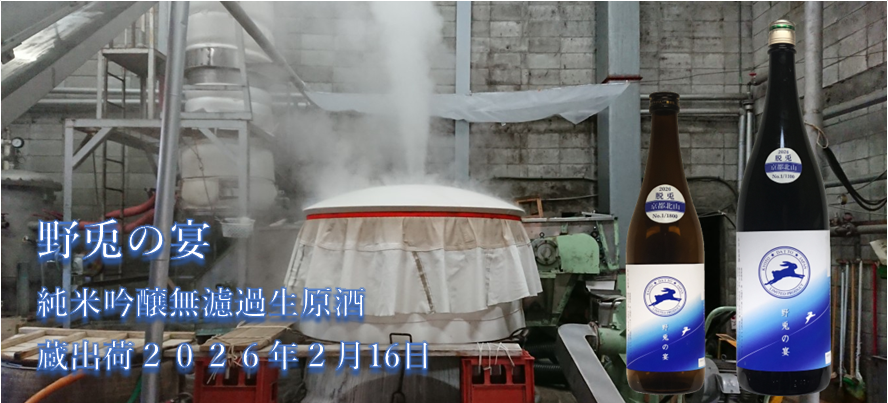 京都北山の水は硬水です。キレの良い辛口を醸します。米は京都限定の「京の輝き」。
自社酵母で造りました。
酢イソ系の香りがふくみ香でも感じられ、優しい甘酸がさらっとした味わいを演出しています。
- The water from Kitayama in Kyoto is hard water, which produces a crisp,
dry sake. The rice used is "Kyo no Kagayaki," a variety exclusive
to Kyoto. It is brewed with our own yeast. You can sense an isoacetic acid-like
aroma in the lingering scent, and the gentle sweet and sour taste creates
a smooth finish.
- L'eau de Kitayama, à Kyoto, est dure, ce qui donne un saké vif et sec.
Le riz utilisé est le « Kyo no Kagayaki », une variété exclusive à Kyoto.
Il est brassé avec notre propre levure. On perçoit un arôme persistant,
évoquant l'acide isoacétique, et sa saveur douce-amère lui confère une
finale harmonieuse.
-
兎のぬくもり2023
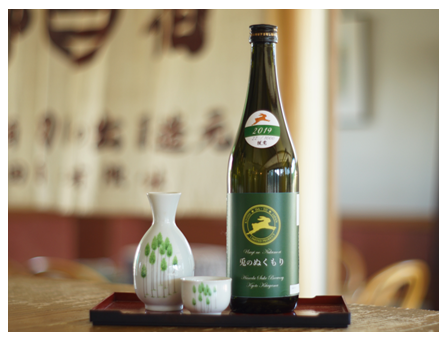 米は京都産「京の輝き」自社酵母で造った純米吟醸の原酒です。少し琥珀色が出てきました。穏やかな香りと舌触りがり、ヒネた印象はまだありません。旨味があり、冷やもお薦めですが、お燗しても美味しく飲んでいただけます。
- This is a pure rice ginjo made with Kyoto-grown "Kyounokagayaki"
rice and our own yeast. It has a slight amber color. It has a gentle aroma
and texture, and there is no harsh impression yet. It has a rich umami
flavor and is recommended to drink chilled, but it is also delicious when
warmed.
- Ce ginjo pur riz est élaboré à partir de riz « Kyounokagayaki » cultivé
à Kyoto et de notre propre levure. Sa robe est légèrement ambrée. Son arôme
et sa texture sont délicats, sans aucune âpreté. Riche en umami, il est
conseillé de le déguster frais, mais il est également délicieux chaud.
- 四季・京都北山の酒造り
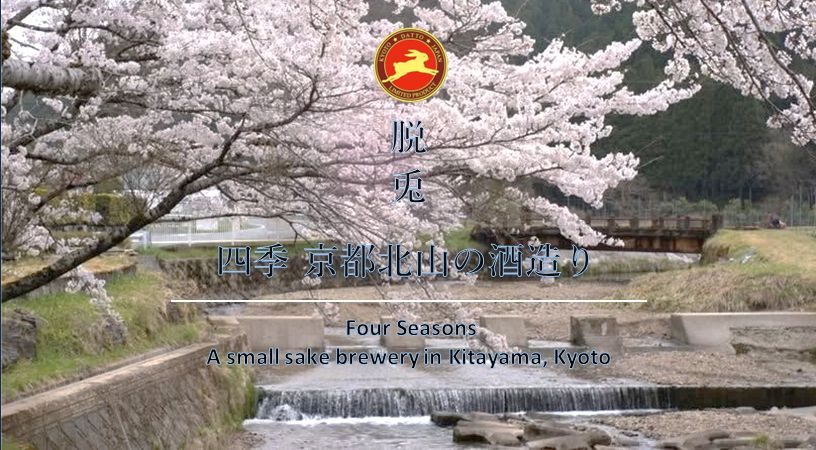
- 自然に恵まれた京都北山。四季の中で蔵人が酒造りに励む姿を追いかけた動画です。
- Kitayama, Kyoto, is blessed with nature. This video follows the brewers
as they work hard at sake brewing throughout the four seasons.
- Kitayama, à Kyoto, est un véritable paradis naturel. Cette vidéo suit les
brasseurs dans leur travail acharné à la fabrication du saké au fil des
quatre saisons.
-
- 脱兎 試験醸造 2025 TRIAL BREWING
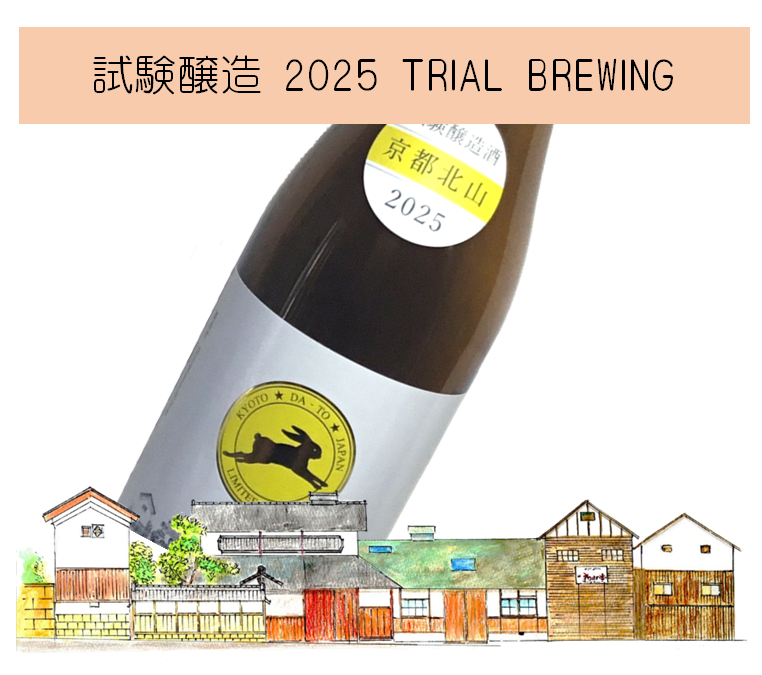
- 原田杜氏が毎年挑戦する試験醸造酒です。今年は、最初にパイナップルの香り。酸がしっかりとしたお酒です。
This is a test brew that Toji Harada attempts every year. This year, the
first aroma you'll notice is pineapple. It's a sake with a strong acidity.
Il s'agit d'un saké test que Toji Harada teste chaque année. Cette année,
le premier arôme que vous remarquerez est celui de l'ananas. C'est un saké
à l'acidité prononcée.
-
- 酒造り始まる(道具を洗浄殺菌)
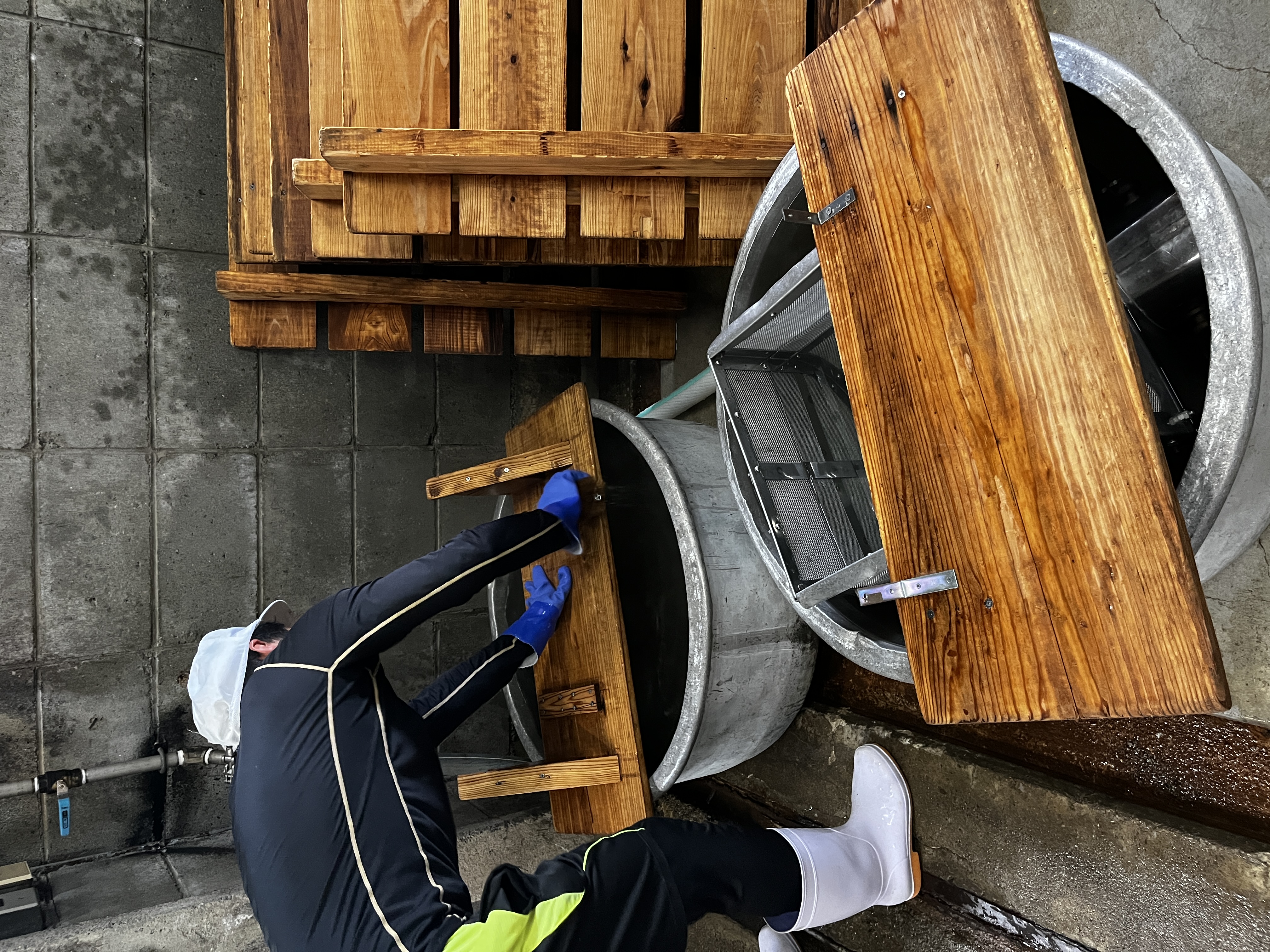
- 九月、酒造りが始まります。来年の春まで仕込みが続きます。道具を丁寧に洗浄、殺菌は大事な作業です。
- Sake brewing begins in September and continues until next spring. Careful
cleaning and sterilization of tools is an important task.
- Le brassage du saké commence en septembre et se poursuit jusqu'au printemps
suivant. Le nettoyage et la stérilisation minutieux des outils sont essentiels.
-
-
- 探訪 脱兎の故郷 京都北山
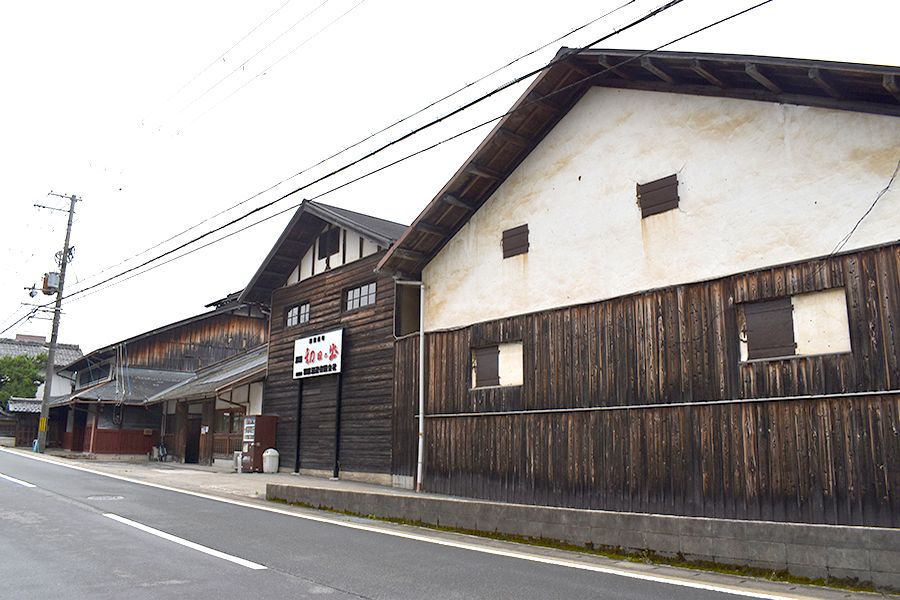 京都北山。
京都北山。
- 羽田酒造のある周山町の風景と、明智光秀が築城した周山城跡、近隣の名勝地、皇室ゆかりのお寺などをご紹介。脱兎が生まれる京北地区をご覧下さい。
- Terroir, Kyoto Kitayama. We introduce the scenery of Shuzan Town, where
Haneda Sake Brewery is located, the ruins of Shuzan Castle, built by Akechi
Mitsuhide, nearby scenic spots, and temples associated with the Imperial
family. Take a look at the Keihoku region, where Datsuto was born.
- Terroir, Kyoto Kitayama. Nous vous présentons les paysages de la ville
de Shuzan, où se trouve la brasserie de saké Haneda, les ruines du château
de Shuzan, construit par Akechi Mitsuhide, les sites pittoresques environnants
et les temples associés à la famille impériale. Découvrez la région de
Keihoku, berceau de Datsuto.
- 脱兎の故郷 バス旅
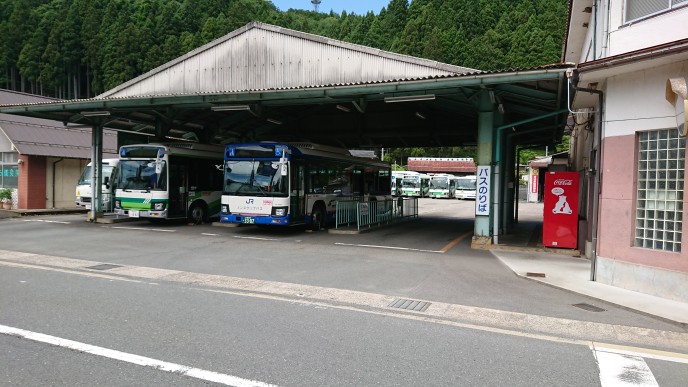 京都駅から周山まで約1時間30分のバス旅です。
- 午前の周山行きバスは4本です。乗り遅れない様ご注意ください。市外は坂道とカーブ、そして、トンネルが続く西の鯖街道です。北山杉に囲まれた静かな場所です。
- It's about an hour and a half bus ride from Kyoto Station to Shuzan. There
are four buses to Shuzan in the morning. Be careful not to miss yours.
Outside the city is the Western Saba Kaido, a road lined with slopes, curves,
and tunnels. It's a quiet place surrounded by Kitayama cedars.
- Comptez environ une heure et demie de bus depuis la gare de Kyoto jusqu'à
Shuzan. Quatre bus desservent Shuzan le matin. Attention à ne pas manquer
le vôtre. À l'extérieur de la ville se trouve le Western Saba Kaido, une
route bordée de pentes, de virages et de tunnels. C'est un endroit paisible
entouré de cèdres de Kitayama.
原田杜氏の夏の草刈り
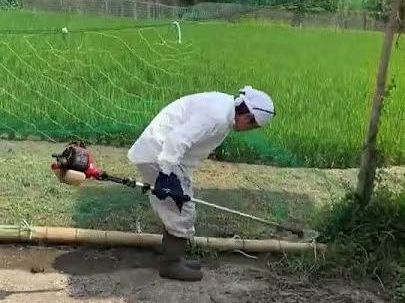
- 蔵の敷地で京都限定の酒造好適米「祝米」を作っています。鹿が稲を食べに来るので、田圃の周囲にネットを張ります。原田杜氏は猛暑の中、汗を流しながら育てています。
- On the premises of the brewery, they grow "Iwaimai," a type of
rice suitable for sake brewing that is only available in Kyoto. Because
deer come to eat the rice, they put up netting around the rice fields.
Toji Harada works hard in the scorching heat to cultivate the rice.
- Sur le site de la brasserie, on cultive du riz « Iwaimai », un type de
riz adapté à la fabrication du saké, uniquement disponible à Kyoto. Les
cerfs venant le manger, on installe des filets autour des rizières. Toji
Harada travaille dur sous une chaleur torride pour cultiver le riz.
-
-
-
-
-
-
-
-
-
-